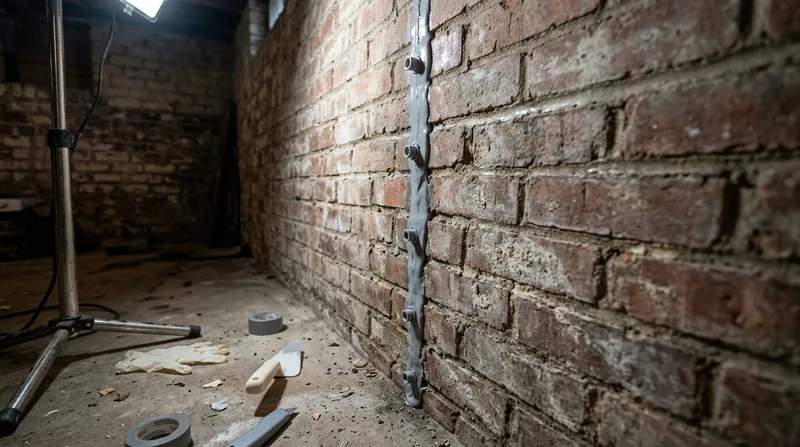




Richmond sits right on the Fall Line, where the James River drops over granite rapids and the ground changes fast from Piedmont red clay and saprolite on the west side to Coastal Plain sands and clays with a high water table to the east. That geology, combined with the shrink-swell clays under Henrico and Chesterfield and the old brick or granite foundations laid in soft lime mortar across Church Hill, the Fan, and Jackson Ward, is why Foundation Crack Repair in Richmond is rarely a one-size-fits-all patch. We inspect every crack, distinguish shrinkage and settlement cracks from structural movement, and match the repair to what the wall is actually doing. Whether you own a 1900s brick foursquare in the Museum District, a 1950s ranch in Lakeside, or a 2000s Colonial in Short Pump with a poured-concrete basement, the right answer depends on the crack, the soil, and the water pressure behind it. Call (804) 525-9678 to schedule a free basement inspection, or start with our basement waterproofing services page to see how crack repair fits into a full moisture-control plan.
Why Foundation Cracks Open Up in Richmond's Clays and Old Brick Cellars
Richmond homes take heavy rain from summer thunderstorms and hurricane remnants, and the ground here moves with the seasons. West of the fall line, Piedmont red clay and saprolite swell when wet and shrink when dry, which flexes basement walls and opens vertical cracks. East of the city, the high water table in the Coastal Plain sands pushes hydrostatic pressure against foundations, so water finds any crack, cold joint, or mortar seam. Older English basements and cellars in Church Hill and Jackson Ward were built with soft lime mortar that erodes over decades, while 1990s and newer poured walls in Short Pump and Midlothian crack from curing shrinkage and settlement.
- Vertical cracks in poured walls usually come from curing shrinkage or minor settlement and are good candidates for injection.
- Diagonal and stair-step cracks in brick or block often signal differential settlement or shrink-swell clay movement and need evaluation before sealing.
- Horizontal cracks with inward bowing point to soil pressure and require structural repair, not just a patch.
- Efflorescence and white mineral staining mean water is already moving through the wall, even if the basement floor looks dry.
- Wet walls after rain along the bottom course usually mean the footing drain or exterior drainage is failing, not just the crack itself.
Each of these patterns calls for a different repair, and sealing the wrong one wastes money and leaves the water problem in place.
Key info: In Forest Hill and Westhampton, we routinely find hairline vertical cracks in 1920s brick that look minor but weep during every heavy storm. A moisture reading and a look at the grading and downspouts usually tells us whether injection alone will hold or whether pressure is coming from the footing drain.
For official guidance on structural permits and contractor licensing in Virginia, homeowners can check the Virginia Department of Professional and Occupational Regulation and confirm local requirements with the City of Richmond building department.
How We Diagnose and Repair Foundation Cracks in Richmond Homes
We start by reading the crack, not by selling a kit. During the free inspection we map the crack's width, direction, and movement, check for efflorescence and moisture, test the wall for bowing, and look at grading, downspout discharge, and the condition of the drain tile. That tells us whether the crack is cosmetic, a water-entry path, or a symptom of structural movement. Only then do we recommend epoxy injection, polyurethane injection, or a structural repair, and we tell you plainly when simple sealing is enough.
- We walk the basement and exterior, photograph the crack, and record moisture readings and any wall deflection.
- We clean the crack and drill injection ports at the correct spacing for its width and depth.
- We inject the right material: epoxy injection for dry, stable cracks that need structural bonding, or polyurethane injection for wet, active leaks that need to swell and seal.
- We seal the surface, remove the ports, and verify the repair holds under pressure.
- If we find bowing or settlement, we recommend carbon fiber straps or wall anchors rather than pretending injection alone will fix it.
The result is a repair matched to the actual failure mode, with a clear explanation of what we did and why.
Key info: A recent job in Bellevue involved a 1930s brick Tudor with a wet diagonal crack near the corner. Injection stopped the leak, but the grading and a missing downspout extension were feeding the wall, so we corrected the drainage at the same time. In Tuckahoe, a poured-wall shrinkage crack in a 1990s Colonial took a two-hour epoxy injection and has stayed dry since.
If the inspection shows water moving through the wall rather than just a crack, we may recommend an interior drain tile system to relieve pressure at the footing before sealing, because a patch over an active hydrostatic problem will not last.
Repair Methods We Use and When Each One Fits
Not every crack should be treated the same way. We choose the method based on crack width, whether it is wet or dry, and whether the wall is moving. The table below shows the approaches we use most often in Richmond and the conditions each one is built for.
| Approach | Description | Best for |
|---|---|---|
| Epoxy injection | Structural epoxy bonds crack faces back together and restores wall strength. | Dry, stable vertical or diagonal cracks in poured concrete. |
| Polyurethane injection | Flexible foam expands with water and seals active leaks. | Wet, leaking cracks and cold joints under hydrostatic pressure. |
| Surface sealing and parging | Hydraulic cement or masonry patch over a prepared surface. | Hairline, non-structural cracks in brick or block, as a first step. |
| Carbon fiber straps | Straps anchored to the wall resist inward bowing. | Cracks with wall movement or bowing from soil pressure. |
| Wall anchors | Anchors pull a bowing wall back toward the soil. | More advanced bowing where straps alone are not enough. |
When bowing is present, we move to our bowing wall repair approach rather than treating it as a simple crack.
Foundation Crack Repair Cost in Richmond: What to Expect
Most single-crack injections in Richmond start at from $450, and that figure is realistic for a straightforward vertical crack in a poured wall with good access. The price moves up when the crack is wide, when it is wet and active, when multiple cracks are involved, or when the wall shows movement that needs straps or anchors. Access matters too: a crack behind a finished wall or in a tight English basement in Church Hill takes more labor than one in an open Short Pump basement.
We quote after the inspection, not over the phone, because the crack tells us which method is needed. Getting two or three estimates is smart, and we encourage you to compare scope, not just the number: ask whether the quote includes diagnosis, surface sealing, and a check of the drainage feeding the wall. For a broader breakdown of what different repairs run in this market, see our pricing overview.
Choosing a Foundation Crack Repair Contractor Near Me in Richmond
Hiring for crack repair is mostly about verifying that the contractor will diagnose before selling. Ask for proof of Virginia contractor licensing and general liability and workers' compensation insurance, and ask whether the crew doing the injection is the same crew that inspected the wall. Check references from jobs similar to yours, especially older brick basements or bowing walls, and confirm who pulls any permit the work requires.
Structural foundation repair, egress work, and changes to drainage or sump discharge commonly require permits, and the rules vary by jurisdiction, so verify with the City of Richmond or the relevant county building department before work starts. If your home is in a historic district or an HOA, check those requirements as well. We are a Basement Health Association member and provide a transferable warranty on our work. To set up an inspection, reach us through our contact page or call (804) 525-9678.
Foundation Crack Repair in Richmond: Pricing Guide
| Service | Price | Details |
|---|---|---|
| Single crack epoxy injection | Starting at $450 | Includes crack mapping, port drilling, epoxy injection, and surface sealing; price rises with crack width and access difficulty. |
| Active leak polyurethane injection | Starting at $650 | Includes flexible foam injection for wet, leaking cracks; higher when multiple cracks or hydrostatic pressure is present. |
| Structural crack repair with carbon fiber straps | On estimate | Requires on-site evaluation of wall movement and bowing before a number is given. |
| Multiple crack repair package | On estimate | Priced per crack after inspection; bundling reduces per-crack cost when access is shared. |
| Travel | Included | In Richmond and surrounding areas, no separate call-out or mileage fee. |
| Estimate | Free | Response within 24h at (804) 525-9678, no obligation to book. |
Indicative pricing, the exact cost depends on square footage, finish, and site access. Free personalized estimate within 24h at (804) 525-9678.


